

Stock Market Today: S&P 500 SPX, Nasdaq IXIC and Dow DJI Cling to Records Into Month-End as Tehran Truce Pulls Crude Lower and NetApp NTAP Rockets 18%
tentative 60-day U.S.-Iran ceasefire memorandum drained the geopolitical premium out of crude | That's TradingNEWS
Key Points
- S&P 500, Nasdaq and Dow hold near records into month-end after a six-day winning streak.
- Tentative 60-day U.S.-Iran ceasefire pulls WTI toward $87 and cools the risk premium.
- Hawkish Warsh-led Fed and three-year-high PCE keep the long bond above 5%.
Wall Street walked into Friday's session perched at the top of its range, with the S&P 500 (SPX) having closed Thursday around 7,561 after a roughly 0.55% advance that extended a six-day winning streak and notched yet another record close, while the Nasdaq Composite (IXIC) finished near 26,800 and the Dow Jones Industrial Average (DJI) hovered close to the flatline just above 50,400 after the prior session's healthcare-and-energy drag. Index futures opened the final day of May in a tight, indecisive band — at one read S&P 500 contracts ticked higher on the overnight Iran headline, while a separate snapshot showed them slipping around 0.2% with Nasdaq futures off roughly 0.4% and Russell 2000 futures down about 0.4% near 2,913 — capturing a market that has run hard for a week and is now wrestling with whether record valuations can absorb both a hawkish inflation print and a leadership change at the Federal Reserve. The S&P 500 sits up roughly 6% over the trailing month and nearly 28% versus a year ago on a CFD-tracked basis, a torrid pace that leaves the index vulnerable to even modest disappointment, and the VIX backing up toward 16.7–16.9 with a near-3% intraday pop signaled that traders were paying a little more for protection as they squared books rather than chasing the tape into the weekend. The dominant narrative remains the same one that has powered the climb all month: a wall-of-worry rally where every flicker of diplomatic progress on Iran is treated as a green light, and every fresh inflation surprise is shrugged off as a problem for a later quarter, leaving the market richly priced and reflexively optimistic just as the calendar turns and fund managers begin rebalancing into June.
The Iran Ceasefire Memorandum Becomes the Session's Pivot
The single most important driver into Friday was the reported tentative agreement between Washington and Tehran to extend a ceasefire by 60 days and reopen talks on Iran's nuclear program, a memorandum that also contemplates a gradual restoration of energy exports from the Persian Gulf and that markets greeted as the closest thing yet to an off-ramp from a conflict that has whipsawed risk assets for weeks. The mechanism by which the deal lifts equities is almost entirely the oil channel: with the probability of a prolonged supply shock repriced lower, West Texas Intermediate crude slid roughly 1.4% toward $87.66 a barrel and Brent eased about 1.3% to near $92.47 in one read, unwinding part of the geopolitical premium that had been embedded in prices through early May, even as a separate intraday snapshot showed Brent rebounding nearly 3% back toward $94.88 — a tug-of-war that underscores how fragile the truce narrative remains and how thin the conviction is beneath the headlines. The reason cooler crude matters so much is the inflation feedback loop: lower energy prices ease the headline inflation impulse, which in turn lets Treasury yields stabilize after their recent surge, which then relieves pressure on the long-duration growth names that dominate index weighting. The risk traders kept flagging is symmetry — the same headlines that have repeatedly proven premature or outright "bogus" over the past two weeks mean the rally is leaning on a deal that has been declared "near" and "in the final stages" multiple times without crossing the finish line, and any escalation that pushes crude back toward $100 would reignite exactly the inflation fears the market is currently pricing out, turning today's tailwind into next week's headwind.
A Hawkish PCE Print and the Warsh Fed Collide
Working directly against the risk-on impulse was the macro backdrop, where the latest PCE inflation reading climbed to its highest level in nearly three years even as the indexes still managed to close at records, a juxtaposition that captures the market's current willingness to look through hot data so long as the growth engine keeps humming. The bigger structural overhang is the changing of the guard at the Federal Reserve, with Kevin Warsh now installed as Fed Chair and the bond market treating his arrival as a decisively hawkish signal — long-end Treasury yields have been soaring in a move that commentary explicitly tied to the leadership transition, and the framing that the administration had put Warsh "in a tough spot" speaks to the awkward politics of a White House that wants lower rates inheriting a chair whose credibility is staked on fighting inflation. Robust jobless claims and resilient consumer-spending data reinforced the hawkish read, leaving the Fed with little incentive to cut and the market with little justification for the rate relief that typically underwrites multiple expansion. The practical takeaway for equities is that the rally is being carried by earnings momentum and the Iran-driven oil relief rather than by any dovish pivot, which makes the tape more dependent on the AI capital-expenditure cycle and corporate execution than on a friendly Fed — a meaningfully different and more fragile foundation than the rate-cut-fueled advances of prior years, and one that explains why the long bond's behavior has become the single most-watched variable on every trading desk.
Semiconductors and the AI Complex Still Wear the Crown
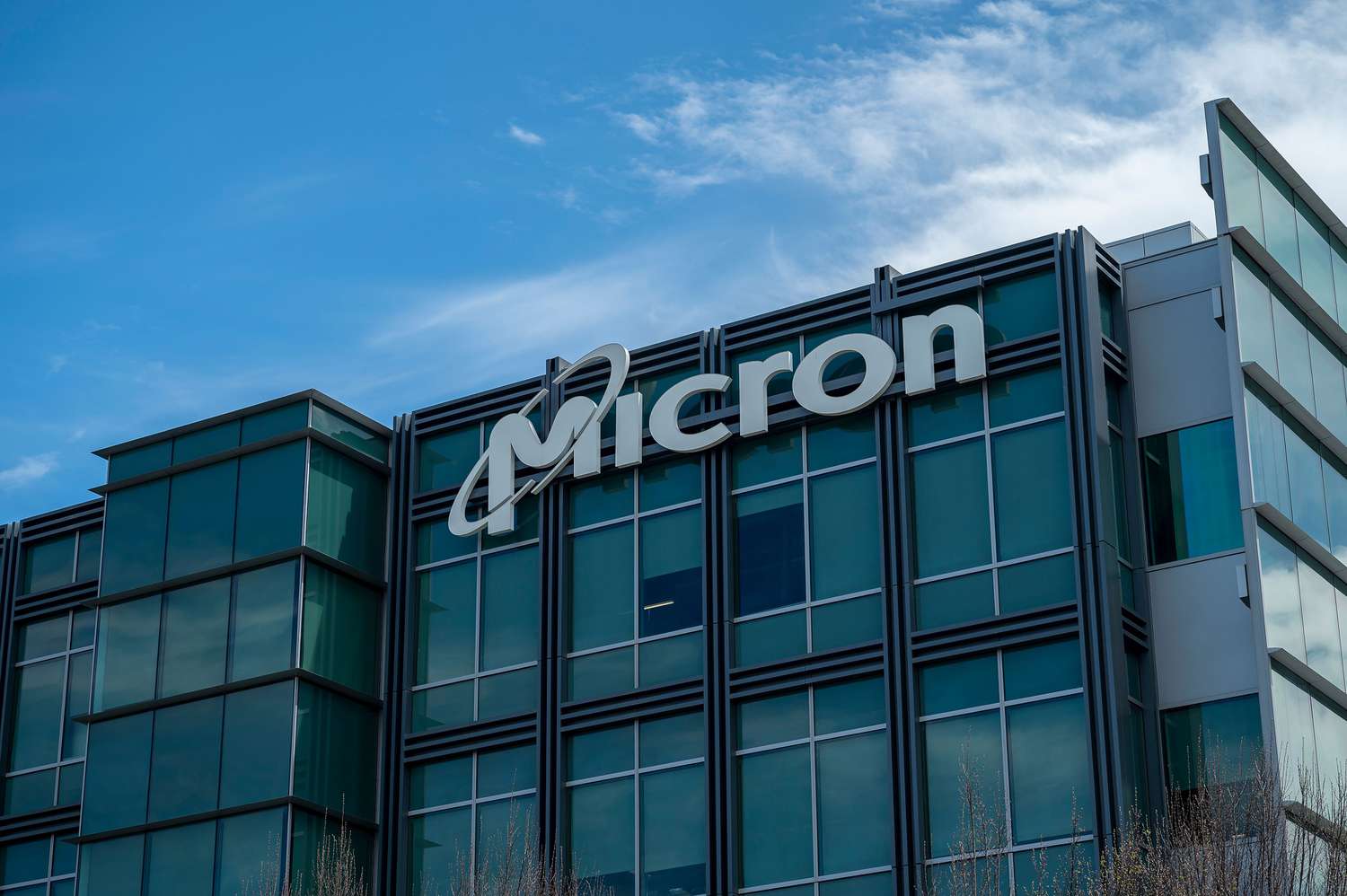
The leadership profile of this rally remained almost cartoonishly concentrated in semiconductors and the artificial-intelligence stack, with the Micron Technology (MU) story still echoing through the tape after the chipmaker vaulted more than 19% earlier in the week and crossed a $1 trillion market capitalization intraday on the heels of an aggressive UBS upgrade that flagged better than 100% upside tied to its long-term supply agreements. That move dragged the broader memory and AI-linked silicon complex higher, lifting Advanced Micro Devices (AMD) and Qualcomm (QCOM) alongside mega-cap anchor Alphabet (GOOGL), and the read-through is that the market is paying up aggressively for any name with credible exposure to AI infrastructure demand and pricing power in high-bandwidth memory. The AI software and infrastructure cohort extended that strength, with Microsoft (MSFT), Oracle (ORCL) and Palantir (PLTR) climbing between roughly 3% and 4% in recent sessions as investors rewarded the picks-and-shovels layer of the buildout. The Roundhill Magnificent Seven ETF (MAGS), an equal-weight basket of Alphabet, Amazon (AMZN), Apple (AAPL), Meta Platforms (META), Microsoft, Nvidia (NVDA) and Tesla (TSLA), traded fractionally lower near $70.59 in premarket, a reminder that even on up days for the broad tape the mega-cap complex can chop sideways while leadership rotates underneath the surface from the platform giants toward the semiconductor and software layers most directly levered to capex. The concentration is the bull case and the bear case at once: it has produced spectacular index returns, but it leaves the market acutely exposed to any wobble in the AI spending thesis, where a single guidance cut from a hyperscaler could unwind weeks of gains across the entire complex.
The Quantum and Space Baskets Stay in Speculative Overdrive
Beneath the mega-cap layer, the speculative fringe of the market continued to behave like a casino, with the space and quantum baskets producing the kind of triple-digit single-day moves that typically mark either a thematic mania or a liquidity-starved small-cap squeeze. Astrotech Corporation (ASTC) gapped up nearly 67% on heavy volume of roughly 12.8 million shares after extending a prior 500% rally, with the catalyst a board-approved lunar resource initiative targeting Helium-3 and Silicon-28 to feed quantum-computing supply chains — a narrative so far out on the risk curve that it functions more as a momentum vehicle than an investable thesis. Established space names rode the same thematic wave earlier in the week, with Rocket Lab (RKLB) climbing more than 5% and Firefly Aerospace surging as investors chased the orbital-economy story, while the micro-cap cohort showed the darker side of the mania as Agape ATP (ATPC) ripped more than 105% on six times average volume without a clear fundamental catalyst and other names cratered on dilutive secondary offerings. The signal traders should extract is bifurcation: the AI-adjacent quantum and space themes are attracting genuine institutional capital at the large-cap level while simultaneously breeding a froth of low-float momentum trades that can reverse violently, and the wave of dilutive direct offerings hitting small-caps — names pricing $100 million raises at $5.08 a share, well below their last close — is the classic late-cycle tell of companies cashing in on retail enthusiasm before it fades. That kind of behavior at the speculative edge rarely coincides with the early innings of a bull market and is worth watching as a sentiment thermometer even for investors who would never touch the names themselves.
Sector Composition Reveals a Rally Carried by Two Legs
The internal composition of the tape told a story of a market resting on just two pillars — technology and AI infrastructure — while several traditionally defensive and cyclical sectors actively dragged. Healthcare was a persistent weight on the Dow, with UnitedHealth (UNH) and Merck (MRK) among the blue-chip components declining and pulling the price-weighted index into underperformance even as the cap-weighted S&P 500 and Nasdaq pushed to records, a divergence that flatters the headline indexes while masking thinner participation. Energy similarly lagged as the Iran-driven crude pullback compressed the sector's near-term earnings outlook, and financials extended a stretch of slower momentum with Visa (V) and BlackRock (BLK) each dropping close to 2% in recent sessions, a soft patch that matters because financials are typically the sector that needs to confirm a durable broadening before a tech-led rally can be trusted as more than a momentum trade. The advance-decline backdrop earlier in the week had been constructive, with roughly 56.5% of issues advancing against about 39.9% declining at one midday read, but the Friday futures softness in the Russell 2000 — small caps slipping back toward 2,913 after the index had broken above 2,900 for the first time ever — suggested the broadening that bulls want to see remains tentative and dependent on continued yield relief rather than self-sustaining. The cleanest way to characterize the current sector map is that the market is being pulled forward by a narrow cohort of AI winners while the cyclical and rate-sensitive majority treads water, a structure that can persist far longer than skeptics expect but that also concentrates the downside risk into the exact names everyone already owns.
The Cross-Asset Map: Yields, Oil, Gold, the Dollar and Bitcoin
The cross-asset picture is where the competing forces driving equities come into sharpest focus, beginning with the Treasury curve, where the recent surge in long-end yields tied to the Warsh transition has been the single biggest threat to the rally's foundation. Earlier in the week the 10-year yield had drifted lower by more than 8 basis points toward 4.485% on the Iran-relief trade, with the 2-year near 4.057% and the 30-year just above 5.0% after briefly threatening to break back below that psychologically important line, but the structural pressure from a hawkish Fed regime change has kept the long bond elevated and the curve's behavior choppy, with yields stabilizing only as energy prices pared their rebound. Gold pulled back sharply, sliding toward the $4,416–$4,478 range in a roughly 1.2%–1.5% decline as the easing of geopolitical risk drained some of the safe-haven bid that had carried bullion through the conflict, a move that tends to confirm the market's growing confidence in the ceasefire. The dollar weakened against developed-market peers as the ceasefire news improved global risk appetite, a move that typically supports multinational earnings and emerging-market assets while quietly tightening financial conditions abroad. Bitcoin (BTC) was the standout casualty of the risk recalibration, dropping toward the $73,372–$75,796 zone in a 1.7%–2.9% slide that underscored how the largest cryptocurrency is now trading as a high-beta risk proxy rather than the digital-gold hedge its proponents advertise — when long yields rise and traders trim speculative exposure into month-end, crypto is among the first positions to be pared, and the simultaneous weakness in gold and Bitcoin tells you the safe-haven trade and the speculative trade are both being unwound at once.
Earnings Dispersion Widens as Single-Stock Reactions Turn Violent
The earnings tape produced some of the session's most dramatic single-stock dispersion, a hallmark of a late-cycle market that is rewarding flawless execution and punishing any blemish with outsized moves. NetApp (NTAP) was the standout winner, surging more than 18% in pre-open trading after delivering record-breaking fiscal fourth-quarter 2026 results that validated the storage-and-data-infrastructure play on the AI buildout, a move that reinforced the theme that the unglamorous plumbing of the data center is now commanding growth-stock multiples. SoFi Technologies (SOFI) climbed roughly 7.7% premarket as the fintech cemented a leadership position in its segment, while Replimune Group (REPL) exploded more than 40% after reaching an agreement with the Food and Drug Administration that de-risked its regulatory path — a reminder that biotech binary events remain among the most violent re-rating catalysts in the entire market. On the losing side, Photronics (PLAB) tumbled about 25% following its second-quarter results, and SentinelOne (S) drew genuinely mixed Wall Street reactions to its fiscal first-quarter print, with analysts split on whether the security-software name's growth justified its multiple. The breadth of these reactions — double-digit gaps in both directions across a single morning — tells traders that the market is in a high-conviction, low-tolerance mode where positioning is concentrated and any earnings surprise gets amplified, a dynamic that rewards disciplined stock-picking but also raises the risk of cascade selling if a richly valued high-flyer disappoints into a crowded long.
The Capex Megadeals Reshaping the AI Trade
The structural story underneath the earnings moves is the wave of capital-expenditure megadeals that is rewriting the economics of the technology sector and feeding directly into the AI infrastructure thesis. Dell Technologies (DELL) provided the clearest example earlier in the week, announcing a $9.7 billion Pentagon software deal and reporting its fastest sales growth since it relisted on the New York Stock Exchange in 2018, with revenue of $43.84 billion representing an 88% year-over-year increase that blew past the roughly $35.43 billion consensus, adjusted earnings per share of $4.86 against estimates near $2.94, and a data-center-and-server business that grew 181% year-over-year to account for nearly two-thirds of revenue — a result so far ahead of expectations that it gave management the confidence to sharply raise forward guidance and stunned the analyst community. Snowflake (SNOW) added to the deal momentum with a roughly $6 billion Amazon agreement that, paired with strong earnings, sent the data-cloud name sharply higher and underscored how the largest cloud and enterprise-software players are locking in multiyear, multibillion-dollar commitments that convert the AI narrative into hard contracted revenue. The investing takeaway is that the AI trade has matured from a speculative bet on future demand into a verifiable cycle of signed contracts, accelerating revenue growth and raised guidance, which is precisely why the market has been willing to pay record multiples — but it also means the entire complex is now discounting a continuation of capex intensity that depends on hyperscalers and governments sustaining historically unprecedented spending rates, a bet that looks rational today but would unwind quickly if a single major buyer signaled a pause.
Read More
-
MSFT Slams Into the 200-Day at $450 as Azure's 40% Engine and a Nvidia PC Bombshell Reignite the AI Trade
01.06.2026 · TradingNEWS ArchiveStocks
-
Bitcoin Price Forecast — BTC-USD Clings to the $72K Line After $2.4B ETF Drain — Bears Stalk $68K While Bulls Wait on $74,500
01.06.2026 · TradingNEWS ArchiveCrypto
-
Gold Price Forecast — XAU/USD Tests $4,500 While Rate-Hike Fears and a Surging Dollar Do the Damage
01.06.2026 · TradingNEWS ArchiveCommodities
-
Stock Market Today - Nvidia's PC Chip Bombshell Lifts ARM +10% and HPE While INTC Gets Smoked
01.06.2026 · TradingNEWS ArchiveMarkets
-
Euro Can't Buy a Break — EUR/USD Pinned at 6-Week Lows as the Dollar Wins the Hawkish-vs-Hawkish Standoff
01.06.2026 · TradingNEWS ArchiveForex
Consumer, Retail and the Margin Question
The consumer and retail picture sat uneasily alongside the tech euphoria, with resilient consumer-spending data reinforcing the economy's underlying strength even as the three-year-high PCE print raised the uncomfortable question of how much of that spending strength is real volume versus price. Strong jobless claims and robust consumer activity gave the bulls cover to argue that the labor market remains healthy enough to sustain demand, but the same data handed the hawks ammunition to argue that a Fed under new and more hawkish leadership has every reason to hold rates higher for longer, squeezing the rate-sensitive corners of retail and discretionary spending. Best Buy was among the retail names showing strength in recent sessions, suggesting that pockets of the consumer complex are still executing well even in a higher-rate environment, but the broader concern for margins is that sticky services inflation and elevated input costs leave little room for the kind of margin expansion that drove prior earnings cycles. The cleanest framing for investors is that the consumer is strong in nominal terms but the quality of that strength is increasingly in doubt, and with the Fed disinclined to ease, the retail and consumer-discretionary sectors face a setup where revenue can hold up while margins quietly compress — a dynamic that rarely shows up in headline numbers until a quarterly miss forces a violent repricing of the entire group.
Positioning, Volatility and the Month-End Squeeze
Positioning dynamics into the final session of May were the under-the-radar driver that helps explain the tape's hesitation despite the constructive Iran headline. After a six-day winning streak that pushed every major index to records, the market was stretched, and the VIX ticking up toward 16.7–16.9 with a near-3% pop signaled that traders were rebuilding hedges rather than adding fresh risk into the weekend and the month-end rebalance. Month-end flows are notoriously two-sided — pension funds and target-date strategies that rebalance mechanically can either chase strength or sell winners to restore target weights, and after a 6% monthly gain in the S&P 500 the gravitational pull of rebalancing tends toward trimming the outperformers, which in this market means the very AI and semiconductor names that led the advance. Short positioning added another layer, with the violent squeezes in space and quantum micro-caps showing how thin float and heavy short interest can produce explosive moves that have nothing to do with fundamentals, while the dilutive secondary offerings flooding the small-cap space pointed to opportunistic issuers monetizing elevated valuations. The net read for traders is that the path of least resistance into the close was choppy consolidation rather than a clean breakout, with the market digesting a huge run, hedging against headline risk on a still-unsigned Iran deal, and absorbing mechanical month-end flows all at once — a recipe for two-sided volatility rather than directional conviction.
International Markets: Asia's Record Run and Europe's Quiet Strength
The international backdrop reinforced the global risk-on tone that has underpinned Wall Street's advance, with Asia-Pacific markets leading the way on the back of the same AI-and-ceasefire optimism driving U.S. equities. South Korea's Kospi has been the region's runaway standout, closing at fresh records and building on annual gains north of 70% as the index rode the global semiconductor boom and resumed trading after holidays with broad rallies tracking Wall Street's overnight strength — a performance that has made Korean tech and memory exposure one of the year's most rewarded trades. The broader Asia-Pacific complex tracked U.S. gains as oil prices dropped and strong earnings lifted sentiment, with the easing of the Iran conflict particularly important for the region's energy-importing economies that benefit directly from lower crude. European markets carried a quieter but still constructive tone, with the weaker dollar and stabilizing yields providing a supportive backdrop even as the continent navigated its own growth and policy questions. The takeaway for U.S. investors is that the rally is not a purely American phenomenon — it is a globally synchronized risk-on move powered by the AI capex cycle and the unwinding of the Middle East geopolitical premium, which on one hand validates the strength as broad-based and on the other hand means a reversal in either of those two drivers would hit equity markets worldwide simultaneously, with little geographic diversification available to cushion the blow.
The Final Read: Records on a Narrow Base With Two Fragile Pillars
Pulling the threads together, the market heads into the close of May exactly where the bulls want it — at or near record highs across the S&P 500, Nasdaq and Dow after a six-day winning streak — but the foundation beneath those records is narrower and more fragile than the headline levels suggest. The rally rests on two pillars that are both inherently unstable: a tentative, repeatedly-premature Iran ceasefire whose oil-price relief could evaporate on a single escalation headline, and an AI capital-expenditure supercycle whose record multiples assume that hyperscalers and governments will keep spending at unprecedented rates indefinitely. Against those two pillars sit two genuine headwinds — a PCE reading at a three-year high and a Fed under new hawkish leadership that has every reason to keep the long bond elevated above 5% and resist the rate cuts that growth-stock valuations are implicitly pricing. The internal evidence of narrowing breadth, lagging financials and healthcare, frothy speculation in space and quantum micro-caps, violent two-sided earnings reactions, and month-end hedging all point to a market that has run far and fast and is now consolidating rather than confidently extending. For traders the actionable conclusion is that this is a tape to respect but not to chase — the trend remains higher and the momentum is real, but the risk-reward into a richly valued, narrowly led, hawkishly-pressured market argues for tightening risk, watching the 30-year yield and crude as the two key tells, and treating any clean break of the Iran deal or the AI capex thesis as the signal to move decisively, because in a market this concentrated the unwind, when it comes, will be just as fast as the climb.


